Friday, 26 May 2017

Recipe Alert: Lemon & Blueberry Frozen Greek Yogurt Bites

Following my recent blog post on the amazing benefits of  Greek yogurt and why it deserves to be called a 'Superfood', I thought I'd share this delicious and healthy recipe to keep you cool as the weather's hotting up!  It's gluten-free too.  Yum...

http://tiny.cc/yumyog


Ingredients

  • 1 cup lemon Greek yogurt
  • 2/3 cup plain Greek yogurt
  • 2 tablespoons honey
  • 1 teaspoon vanilla 
  • 1 ¼ cups fresh blueberries

Instructions

  • Combine yogurts, honey and vanilla in a large bowl. Mix until well combined.
  • Add in blueberries and mix until incorporated.
  • Place cupcake liners in 12 regular-sized cupcake cavities. Fill each with equal amounts of the yogurt mixture.
  • Freeze Greek yogurt bites for at least 4 hours before serving.
  • Let frozen Greek yogurt bites sit at room temperature for 1-2 minutes before removing from the pan and liners.
  • If you have any difficulty removing the bites, run a little lukewarm water on the bottom of the tray. 

WHAT OTHER FLAVORS OF FROZEN GREEK YOGURT BITES CAN YOU MAKE?

If lemon and blueberry aren’t quite your cup of tea, there are a lot of different combos you can try:

  • Lime & Raspberry
  • Vanilla & Strawberry
  • Coconut & Pineapple


ENJOY!

Want more healthy insights, recipes, videos or articles like this? Join us to receive 'inspiration in your inbox'- http://tiny.cc/join-me


Article source and images

Wednesday, 24 May 2017

An Alphabetic Guide to SUPERFOODS - Blueberries

Superfoods are nature's gift, they're vibrant, nutritionally dense foods that offer us tremendous dietary and healing potential and this little gem is at the top of my shopping list every time!

DELICIOUS BLUEBERRIES 


When it comes to antioxidants and their health benefits, guess which fruit tops the lot. Everyone knows that antioxidants are crucial to maintain and recover our health, and blueberries, out of all the fruits and vegetables contain the most.

These tasty berries are one of the few fruits native to North America. The berries, leaves and roots were used for medicinal purposes, and by looking at the health benefits explained below, you will understand why.

Heart Health - Heart diseases are no laughing matter so you need to protect your ticker from all those diseases. The vast antioxidants, high fiber content and the ability to dissolve LDL (the bad cholesterol), makes blueberries an ideal dietary supplement to cure many heart diseases.

Many studies show that red wine is good for the heart and that this is due to its source of a phyto nutrient called anthocyanin. This nutrient so happens to be found in blueberries as well, with the difference that blueberries contain 38% more of anthocyanins, than in red wine.

Eye Health - Due to their ability to relieve eyestrain, blueberries in Japan are actually nicknamed "the vision fruit". The various vitamins, minerals and lutein (a carotenoid pigment found in plants and egg yolk) found in blueberries are known to help age related vision problems like cataracts and macular degeneration.

A study published in the Archives of Ophthalmology indicates that eating 3 or more servings of fruit per day can lower your risk by as much as 35% of age related macular degeneration (ARMD), which is the main cause of vision loss in adults.

In World War II the British Air Force pilots were often given bilberry preserves (a cousin of the blueberry family) before they flew for their night missions, so as to improve their night vision and to adapt to different levels of light.

Reduces Belly Fat - A study in the University of Michigan Cardiovascular Center study showed that blueberry intake affected genes linked to fat burning and storage. The test subjects were rats that were fed powdered freeze-dried blueberries. The results were that these rats had less abdominal fat, lower cholesterol and lower triglycerides (blood fats). Of course more studies are needed to prove these same findings on humans.

Brain Health - A few studies have shown that blueberries can improve brain function and can combat the start and the progression of Alzheimer's and Parkinson's. Studies have also shown that by regular intake of these small berries, they can repair damaged brain cells improving the overall functionality of the brain.

A small study by the University of Cincinnati Academic Health Center reviewed the effect of daily consumption of wild blueberry juice on older adults. After 12 weeks the participants with the blueberry juice intake showed improved memory function.

Anti-Cancer Benefits - Another nutrient that blueberries contain in abundance is a flavonoid by the name of kaempferol. A research with over 60,000 women participants in a Nurses Health Study between 1984 and 2002 showed that women whose diets provided the most kaempferol had a 40% reduction in the risk of ovarian cancer.

As you can see the health benefits of blueberries are enormous and everyone should consider adding them in their health diet. But as all superfoods you should use in moderation to gain all the benefits. It would also be wise to consult your physician with adding any kind of food to your diet.

Want more healthy insights, recipes, videos or articles like this? Join us to receive 'inspiration in your inbox'- http://tiny.cc/join-me


Article Source

Tuesday, 23 May 2017

5 Tips for Boosting Your Energy Without Caffeine

How many cups of coffee do you need a day to stay awake? Two, five or more? The fact is that we consume way too many caffeinated beverages.
 Maybe you are thinking, “Who cares?” But have you ever considered what caffeine does to your body? It stimulates the production of adrenaline and gives us more energy for a short time because it increases our heart rate and blood sugar levels. Though this might sound like a good thing, it actually has a negative effect: our body releases adrenaline in response to what it takes to be acute stress (fight-or-flight response) and as we all know, stress is not particularly beneficial for our health. If you want to quit coffee from now on, we have five useful tips on how to boost your energy without caffeine.

1. Take a cold shower

Do you have a hard time getting going in the morning? Then jump in the shower. Even when it takes a lot of effort: take a cold shower! This gets your blood pumping and you are guaranteed to be wide awake afterward. 😉

Here’s how: First, shower with hot water until you are nice and warm. Then start to lower the water temperature gradually – never turn the water instantly to cold. Once the water is cold, start with your legs, then rinse your arms and finally the rest of your body. Repeat this same procedure with warm water. Do as many cycles as you want, just make sure to end with cold water.
Contrast showers are perfect for getting your blood pumping and strengthening your immune system. The only thing you have to be careful about when taking a cold shower is that you start on the right side of your body – your heart is located on the left side and by starting on the right, you avoid putting too much stress on it.

2. Inhale essential oils

Essential oils smell wonderful and are beneficial for your health. If you are looking to boost your energy without coffee, try holding a bottle of essential oil under your nose and inhaling. Lemon oil is particularly good. For a particularly refreshing kick, put a few drops of peppermint oil on your hands, cup them and breathe deeply. You can also massage your neck with peppermint oil – it’s guaranteed to perk you up!

Our tip: When buying essential oils, always make sure that they are therapeutic quality. Inferior quality synthetic oils can do more harm than good (like trigger an allergy).


3. Eat several small meals throughout the day


Are you tired after eating? That’s because your body is busy digesting, especially after big meals. Blood flow increases to the digestive system, which means that there is less oxygen available to the brain. And this reduced supply manifests itself in the form of fatigue. When you eat foods low in fiber, your blood sugar levels spike briefly but then fall again rapidly. Fatty meals can also sit heavy in your stomach. This results in you feeling tired and wiped out. Therefore, you should eat small meals (ideally 4 or 5) throughout the day. That way your body has a steady supply of energy without the overload.


4. Drink the right thing (in the morning)

Is the coffee machine your top priority in the morning? Do you need that first cup of the day to get going? If you want to stop drinking caffeinated beverages from now on (because, for example, it is bad for your digestion), then you should drink a glass of water as soon as you get up in the morning. Add a slice of fresh lemon – it’s refreshing and invigorating. As a general rule, you should try to drink plenty of water throughout the day: don’t forget that your body is about 70% water. Dehydration can lead to headaches as well as fatigue.
Would you like to know how much liquid you need per day? Here is how you can calculate your personal daily requirement: 30 ml x kg body weight = ml per day (15 ml x lb body weight = ml per day).


5. Stay active

Exercise can really perk you up! 😉 And we’re not talking about running a half marathon in the morning. A few bodyweight exercises  (like those in the Runtastic Results app), can get your blood pumping and help you start your day off strong.


Want more healthy insights, recipes, videos or articles like this? Join us to receive 'inspiration in your inbox'- http://tiny.cc/join-me


Article source and images


Thursday, 18 May 2017

Why Am I Always Hungry? Here Are 11 Possible Reasons

Are you embarrassed by a growling stomach and plagued by the never-ending search for something to eat? Do you often wonder why you are always hungry?

Don’t worry, you’re not alone. Below is some research and a list of the 11 most common reasons. (Numbers 2 & 3 will probably surprise you.)


1. You are eating too little
Okay, the first reason is obvious: can it really be that you’re eating too little? Are you working out a lot? Maybe you are simply not getting enough energy and nutrients despite eating three meals a day. A food diary can help you find out if you are giving your body everything it needs.

2. You are thirsty
Yes, sometimes we mistake thirst for hunger. The reason is simple: the hypothalamus (part of the diencephalon and the most important control center of the autonomic nervous system) regulates both hunger and thirst. When you are dehydrated, the hypothalamus can get things mixed up. This is why you reach for a granola bar rather than a glass of water, although this is exactly what you need at that moment. Make sure to drink plenty of water and when you start to feel hungry, drink some water first before eating anything.

3. You are constantly on social media
Photos of friends’ pizza night on Facebook or Instagram. Recipe boards on Pinterest. But what we are talking about can be summed up best in two words: “FOOD PORN!” A problem our parents didn’t have to deal with when they were young… Through our smartphones, we are presented with a flood of mouthwatering images around the clock. Which is a big problem when you consider that there is scientific evidence showing that the mere sight of food can create feelings of hunger. These images of food lead to increased levels of ghrelin, the “hunger hormone,” in your blood. So just put your cell phone down for once! Is this proving difficult for you? Then make sure to check out photos of delicious AND healthy foods.

4. You are sleeping too little
Sleep deprivation has a big influence on feelings of hunger and what you eat. Too little sleep can lead to reduced levels of the hormone leptin, which is responsible for suppressing hunger. At the same time, inadequate sleep also leads to increased ghrelin, the other “hunger hormone,” which stimulates your appetite. This is one of the reasons why lack of sleep is often associated with weight gain. Doctors recommend getting seven to eight hours of sleep per night.

5. You went a little overboard last night
It might not sound logical, but it’s often true: if you eat huge amounts the night before, you will wake up hungry again the next morning. Would you like to know why? Science doesn’t really have a definitive answer yet. One theory has to do with the relationship between sugar and insulin. In the evening, we often eat way too many simple carbohydrates (white bread, refined-wheat pasta and high-sugar foods). The high level of sugar in the blood causes your pancreas to produce too much insulin. This, in turn, makes you feel hungry, thus perpetuating the cycle.

6. You are getting your period soon
Women probably know this all too well: shortly before your period, you could eat everything you see. Chocolate, ice cream and cake are particularly tempting. During the second half of the cycle, many women’s appetite and energy intake actually do increase. Progesterone levels are particularly high during this time, and many women feel sick or depressed shortly before their period. And it is this feeling of the blues that can then lead to the food cravings associated with premenstrual syndrome, or PMS.

7. You are eating wrong
Not only eating too little makes you hungry, but eating the wrong foods can also lead to hunger pangs. Nowadays, we consume far too many simple carbohydrates, while reducing the amount of fiber, protein and healthy fats we take in. The problem is that these nutrients are precisely the ones your body needs and the ones that keep you feeling full. Make sure to eat a balanced diet and stick to regular meals. This leads us to our next point…

8. You are skipping meals
You have overslept and there is no time for breakfast. You are stressed at work so you skip lunch… By the afternoon, you are so hungry you could eat a horse. It’s no surprise considering you have been cutting out meals. We often don’t notice how hungry we are until we get a second to sit down and hear our stomach growling. There is only one method to avoid this situation: eat regularly! Three main meals and possibly one or two snacks a day is the best way to keep your hunger in check.

9. You are bored
Are you actually hungry, or are you just bored? Many people can’t really tell the difference. Are you hungry for an apple and a handful of nuts? No? Then you’re not really hungry, but just looking for something to keep you busy. Find another way to distract yourself. Try doing some exercise, reading a book or meeting friends.

10. You are taking medication
Certain medications can stimulate appetite and hunger, like anti-depressants, for example. Unfortunately, this is one of the undesired side effects. The cravings go away once you stop taking the medication. However, it’s not so easy if you have to take them for a long time. In this case, it is definitely worth talking to your doctor about this problem. Perhaps you can lower the dosage or switch to a different medication with fewer side effects.

11. You are eating too fast
Does it sometimes seem like you just inhale your lunch? Eating too fast usually leads to a higher energy intake. Your stomach might be full, but it takes your brain longer to register it. This gives you the feeling of still being hungry and so you continue to eat. What you can do about this is to eat slowly and chew thoroughly. Take at least 20 minutes for lunch. This is how long your brain needs to realize you are full.


Want more healthy insights, recipes, videos or articles like this? Join us to receive 'inspiration in your inbox'- http://tiny.cc/join-me


Article Source

Monday, 15 May 2017

8 Diet Motivation Tips for Success

Monday blues?  Here are some easy to follow diet motivation tips to get you back to feeling your best. 

Can't lose weight? Try these diet motivation tips for success.

If you've dropped and regained so many pounds it would take a Harvard PhD to do the math, then here are some diet motivation tips that can help.

Sure, you've tried to diet before. You've gotten rid of the cookies in the cupboard, and virtuously refused the cake at the office party. And then, a few weeks into it, your motivation begins to flag. Maybe you hit a plateau in your weight loss, or you're bored with steamed vegetables for dinner night after night, or, tempted by a special dessert, you decide that just this once can't hurt. A few slip-ups and you're totally derailed, physically and emotionally.

If this isn't the first time that losing weight was one of your New Year's resolutions, then maybe you just haven't had the right diet motivation. It turns out that the key to losing and keeping weight off isn't simply a matter of what you eat or how much you exercise - it's your attitude. Lasting weight loss is a slow process and it's all too easy to give up before you reach your goal. With the right psychological tools your chances of diet success can be greatly improved. WebMD consulted experts for diet motivation tips that will keep you, and your diet, on the winning track to losing.

Diet Motivation Tip 1: Set Realistic Goals for Diet Success 

The first step to maintaining your mojo should take place before you cut a single calorie. In fact, one of the strongest predictors of long-term diet success lies in setting the right goal at the start. "If you set unattainable goals, such as losing 30 pounds in just a few months, you're setting yourself up to fail," says Ann Kulze, MD, author of Dr. Ann's 10-Step Diet: A Simple Plan for Permanent Weight Loss and Lifelong Vitality. Instead, you'll be more likely to stick with a diet if you "focus on your health and create sensible eating strategies," says Kulze. Setting smaller, attainable benchmarks, like losing 5 pounds or a single dress size, will give you the confidence to continue.

Diet Motivation Tip 2: Go Slow 

Diet success entails making real lifestyle changes, and that doesn't happen overnight. "You have a better chance at keeping the weight off if you lose it slowly. People who are starving get irritable and have a higher failure rate," Kulze tells WebMD. "If you cut back 200 calories a day, you won't even realize it and the weight will come off and stay off." If you keep in mind that optimal weight loss is 1 to 2 pounds a week, you'll be less frustrated

Diet Motivation Tip 3: Expect Setbacks 

Everyone is bound to give in to temptation (hello, hot fudge sundae) from time to time. The danger isn't a single splurge but letting it become an excuse for an all-out binge. Call it the "I've already blown it so I might as well eat the entire bag of Oreos" syndrome.

Diet Motivation Tip 4: Don't Be a Perfectionist 

So what do you do if you've scarfed down a pint of ice cream before noon? "Perfectionist thinking gets in the way of success more than anything I know," according to Vicki Saunders, RD, who oversees the inpatient weight loss and lifestyle program called Transformations at St. Helena Hospital in Napa, Calif. "A 100-calorie indulgence is just that. But if it's perceived as a failure and a reason to give up, it can turn into a thousand-calorie indulgence." Bottom line when you slip up: Forget about it. Tomorrow is a new (healthier) day.

Diet Motivation Tip 5: Use the Buddy System 

"It's hard to make major lifestyle changes when you're swimming upstream by yourself," says Saunders. Finding other people with similar goals can greatly improve yours odds of diet success. When your spirit - or willpower - flags, having people to call on can provide the support you need to continue. Saunders recommends looking for people at your local gym or Y, Overeaters Anonymous, or an online support group. "Having a support group to turn to, whether it's your family or people in a weight-loss chat room, can make all the difference" for diet success.

Diet Motivation Tip 6: Be Patient 

One of the biggest diet motivation-busters is the dreaded weight loss plateau. You've been doing everything right, exercising and eating well, and the numbers on the scale have been steadily dropping. Then suddenly: nada. The scale stays stuck for several days in a row. According to Ann Kulze, this is perfectly normal. "Turn it around and congratulate yourself on the diet success you've had so far," she urges. "This is a natural part of the weight loss process." When you hit the plateau, you may want to try something slightly different to jump-start your diet. "Commit yourself to expending an extra 100 calories a day with walking, for instance," Kulze advises. "And look honestly to see if you're backsliding in little ways with your eating." A few minor adjustments and you'll soon be back on course.

Diet Motivation Tip 7: Reward Yourself 

Dieting is hard work -- and it's not always a whole lot of fun. Small rewards can provide an incentive to keep going. But make sure your rewards are not food-related. (Translation: Rewarding yourself for losing 5 pounds with a box of chocolates is not what we're talking about.) Set mini-goals along the way and reward yourself when you reach them. Your reward could be a massage, a round of golf, a new pair of jeans, or a hot bubble bath. "Celebrating your diet success will fortify your resolve to continue," says Kulze.


Diet Motivation Tip 8: Have a Maintenance Plan 

For many people, losing weight is far easier than keeping it off. It's important to remember that healthy eating is a lifelong goal, not a one-time project. If this has been a problem for you in the past, devise a maintenance strategy ahead of time. Vicki Saunders says you may want to consult an expert to help create a diet or exercise plan that works for you. "Plan an appointment with a professional, whether it's a nutritionist, a counselor, or a trainer, for an added boost," she says. An expert can help you get off on the right foot -- and maintain your healthy habits even after you've reached your ideal weight.

Want more healthy recipes, videos and articles like this? Join me to get 'inspiration in your inbox' - http://tiny.cc/join-me


Article Source


Sunday, 14 May 2017

The Truth About Belly Fat

Surprise: Everyone has some belly fat, even people who have flat abs.

That's normal. But too much belly fat can affect your health in a way that other fat doesn't.

Some of your fat is right under your skin. Other fat is deeper inside, around your heart, lungs, liver, and other organs.

It's that deeper fat -- called "visceral" fat -- that may be the bigger problem, even for thin people.
Deep Belly Fat

You need some visceral fat. It provides cushioning around your organs.

But if you have too much of it, you may be more likely to get high blood pressure, type 2 diabetes, heart disease, dementia, and certain cancers, including breast cancer and colon cancer.

The fat doesn't just sit there. It's an active part of your body, making "lots of nasty substances," says Kristen Hairston, MD, assistant professor of endocrinology and metabolism at Wake Forest School of Medicine.

If you gain too much weight, your body starts to store your fat in unusual places.

With increasing obesity, you have people whose regular areas to store fat are so full that the fat is deposited into the organs and around the heart, says Carol Shively, PhD, professor of pathology-comparative medicine at Wake Forest School of Medicine.

How Much Belly Fat Do You Have?

The most precise way to determine how much visceral fat you have is to get a CT scan or MRI. But there's a much simpler, low-cost way to check.

Get a measuring tape, wrap it around your waist at your belly button, and check your girth. Do it while you're standing up, and make sure the tape measure is level.

For your health's sake, you want your waist size to be less than 35 inches if you're a woman and less than 40 inches if you're a man.

Having a "pear shape" -- bigger hips and thighs -- is considered safer than an "apple shape," which describes a wider waistline.

“What we’re really pointing to with the apple versus pear,” Hairston says, "is that, if you have more abdominal fat, it’s probably an indicator that you have more visceral fat."

Thin People Have It, Too

Even if you're thin, you can still have too much visceral fat.

How much you have is partly about your genes, and partly about your lifestyle, especially how active you are.

Visceral fat likes inactivity. In one study, thin people who watched their diets but didn't exercise were more likely to have too much visceral fat.

The key is to be active, no matter what size you are.

4 Steps for Beating Belly Fat

There are four keys to controlling belly fat: exercise, diet, sleep, and stress management.

1. Exercise: Vigorous exercise trims all your fat, including visceral fat.

Get at least 30 minutes of moderate exercise at least 5 days a week. Walking counts, as long as it's brisk enough that you work up a sweat and breathe harder, with your heart rate faster than usual.

To get the same results in half the time, step up your pace and get vigorous exercise -- like jogging or walking. You'd need to do that for 20 minutes a day, 4 days a week.

Jog, if you're already fit, or walk briskly at an incline on a treadmill if you're not ready for jogging. Vigorous workouts on stationary bikes and elliptical or rowing machines are also effective, says Duke researcher Cris Slentz, PhD.

Moderate activity -- raising your heart rate for 30 minutes at least three times per week -- also helps. It slows down how much visceral fat you gain. But to torch visceral fat, your workouts may need to be stepped up.

“Rake leaves, walk, garden, go to Zumba, play soccer with your kids. It doesn’t have to be in the gym,” Hairston says.

If you are not active now, it's a good idea to check with your health care provider before starting a new fitness program.

2. Diet: There is no magic diet for belly fat. But when you lose weight on any diet, belly fat usually goes first.
Getting enough fiber can help. Hairston’s research shows that people who eat 10 grams of soluble fiber per day -- without any other diet changes -- build up less visceral fat over time than others. That’s as simple as eating two small apples, a cup of green peas, or a half-cup of pinto beans.

“Even if you kept everything else the same but switched to a higher-fiber bread, you might be able to better maintain your weight over time,” Hairston says.

3. Sleep: Getting the right amount of shut-eye helps.

In one study, people who got 6 to 7 hours of sleep per night gained less visceral fat over 5 years compared to those who slept 5 or fewer hours per night or 8 or more hours per night. Sleep may not have been the only thing that mattered -- but it was part of the picture.

4. Stress: Everyone has stress. How you handle it matters.

The best things you can do include relaxing with friends and family, meditating, exercising to blow off steam, and getting counseling. That leaves you healthier and better prepared to make good choices for yourself.

“If you could only afford the time to do one of these things," Shively says, "exercise probably has the most immediate benefits, because it gets at both obesity and stress.”

Want more recipes, videos and articles like this? Join me to get healthy 'inspiration in your inbox' - http://tiny.cc/join-me


Article Source

Saturday, 13 May 2017

Brain Foods That Help You Concentrate

  
Ginseng, Fish, Berries, or Caffeine?

Listen to the buzz about foods and dietary supplements, and you'll believe they can do everything from sharpen focus to enhance memory, attention span, and brain function.

But do they really work? There's no denying that as we age, our body ages right along with us. The good news is that you can improve your chances of maintaining a healthy brain if you add "smart" foods and drinks to your diet.

Caffeine Can Make You More Alert
There's no magic bullet to boost IQ or make you smarter -- but certain substances, like caffeine, can energize you and help you concentrate. Found in coffee, chocolate, energy drinks, and some medications, caffeine gives you that unmistakable wake-up buzz, though the effects are short-term. And more is often less: Overdo it on caffeine and it can make you jittery and uncomfortable.


Sugar Can Enhance Alertness
Sugar is your brain's preferred fuel source -- not table sugar, but glucose, which your body processes from the sugars and carbs you eat. That's why a glass of something sweet to drink can offer a short-term boost to memory, thinking, and mental ability.

Have too much, though, and memory can be impaired -- along with the rest of you. Go easy on the sugar so it can enhance memory without packing on the pounds.

Eat Breakfast to Fuel Your Brain
Tempted to skip breakfast? Studies have found that eating breakfast may improve short-term memory and attention. Students who eat it tend to perform better than those who don’t. Foods at the top of researchers' brain-fuel list include high-fiber whole grains, dairy, and fruits. Just don't overeat; researchers also found high-calorie breakfasts appear to hinder concentration.


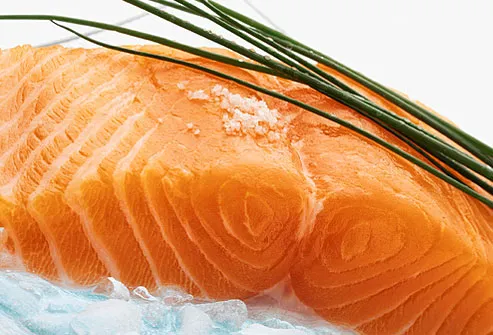
Skinned salmon fillet on crushed ice with chives
Fish Really is Brain Food
A protein source linked to a great brain boost is fish -- rich in omega-3 fatty acids that are key for brain health. These healthy fats have amazing brain power: A diet with higher levels of them has been linked to lower dementia and stroke risks and slower mental decline; plus, they may play a vital role in enhancing memory, especially as we get older.  For brain and heart health, eat two servings of fish weekly.


Add a Daily Dose of Nuts and Chocolate
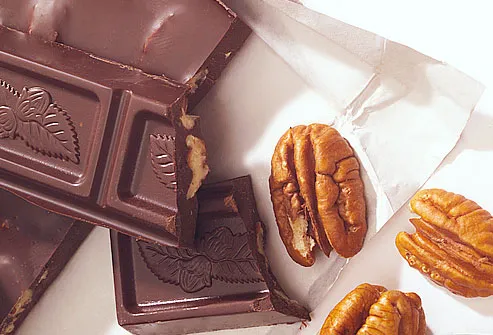
Bar of chocolate beside pecans
Nuts and seeds are good sources of the antioxidant vitamin E, which has been linked in some studies to less cognitive decline as you age. Dark chocolate also has other powerful antioxidant properties, and it contains natural stimulants like caffeine, which can enhance focus.

Enjoy up to an ounce a day of nuts and dark chocolate to get all the benefits you need with a minimum of excess calories, fat, or sugar.


Add Avocados and Whole Grains
Every organ in the body depends on blood flow, especially the heart and brain. A diet high in whole grains and fruits like avocados can cut the risk of heart disease and lower bad cholesterol. This reduces your risk of plaque buildup and enhances blood flow, offering a simple, tasty way to fire up brain cells.

Whole grains, like popcorn and whole wheat, also contribute dietary fiber and vitamin E. Though avocados have fat, it's the good-for-you, monounsaturated fat that helps with healthy blood flow.

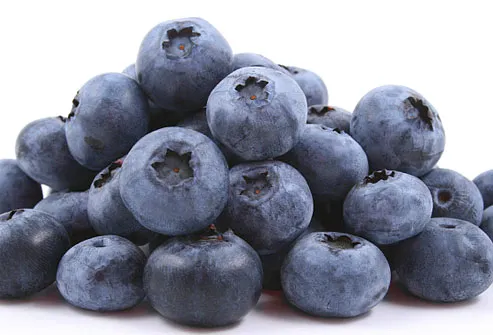
pile of fresh blueberriesBlueberries Are Super Nutritious

Research in animals shows that blueberries may help protect the brain from the damage caused by free radicals and may reduce the effects of age-related conditions such as Alzheimer's disease or dementia. Studies also show that diets rich in blueberries improved both the learning and muscle function of aging rats, making them mentally equal to much younger rats.    

Benefits of a Healthy Diet
It may sound trite but it's true: If your diet lacks essential nutrients, it can hurt your ability to concentrate. Eating too much or too little can also interfere with your focus. A heavy meal may make you feel tired, while too few calories can result in distracting hunger pangs.

Benefit your brain: Strive for a well-balanced diet full of a wide variety of healthy foods.

Vitamins, Minerals, and Supplements?
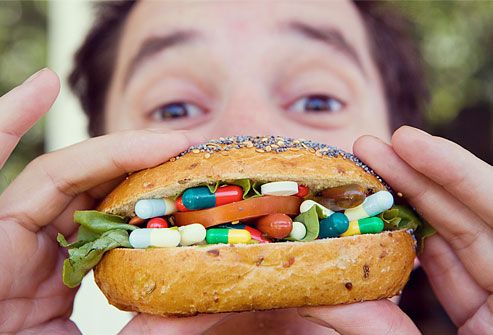
Store shelves groan with supplements claiming to boost health. Although many of the reports on the brain-boosting power of supplements like vitamins B, C, E, beta-carotene, and magnesium are promising, a supplement is only useful to people whose diets are lacking in that specific nutrient.

Man eating sandwich of pills and capsules
Some researchers are cautiously optimistic about ginseng, ginkgo, and vitamin, mineral, and herb combinations and their impact on the brain, but more proof is still needed.

Check with your doctor.

Get Ready for a Big Day
Want to power up your ability to concentrate? Start with a meal of 100% fruit juice, a whole-grain bagel with salmon, and a cup of coffee. In addition to eating a well-balanced meal, experts also offer this advice:
  • Get a good night's sleep.
  • Stay hydrated.
  • Exercise to help sharpen thinking.
  • Meditate to clear thinking and relax.
Want more healthy recipes, videos and articles like this? Join me to receive 'inspiration in your inbox' - http://tiny.cc/join-me

Article and Images - Source